With the increasing demand for regional business and cross-border access, many SMEs choose to rent Hong Kong cloud servers to improve access speed and compliance convenience. This article focuses on the impact of renting Hong Kong cloud servers on SME operating costs and ways to save them. The system analyzes the cost composition of bandwidth, storage, security, and elastic scalability, and proposes actionable optimization strategies to help enterprises effectively control expenses while ensuring service quality, achieving a balance between cost and efficiency.
SMEs consider renting a Hong Kong cloud server usually due to a combination of network latency, cross-border access, and compliance requirements. As an international network hub, Hong Kong can provide low latency and stable connections for businesses serving customers in South China and the Asia-Pacific region; At the same time, compliance and connectivity convenience in local data centers help enterprises deploy services more smoothly under regulatory and partner requirements, thereby impacting overall operational efficiency and cost structure.
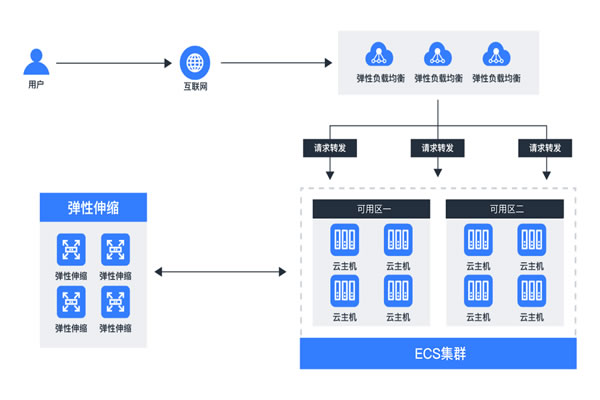
Renting a Hong Kong cloud server impacts both direct and indirect costs. Direct costs include server rental, bandwidth, and storage fees; Indirect costs include maintenance, labor, system integration, and migration expenses. Different deployment models (such as shared instances or dedicated resources) and service level agreements further affect budget allocation, so enterprises must consider availability, scalability, and long-term operational overhead.
Bandwidth usage and network latency directly determine part of the operating costs. If services to external customers require high throughput or stable low latency, bandwidth demand will rise, and the billing method (per traffic or peak bandwidth) will affect fee fluctuations. By optimizing content distribution, compression transmission, and caching strategies, enterprises can effectively reduce bandwidth-related expenses when renting Hong Kong cloud servers while ensuring user experience.
Storage type, redundancy level, and backup frequency all affect the cost of renting a Hong Kong cloud server. Hot and cold data should be stored in layers according to access frequency, with reasonable backup and retention strategies to avoid long-term, high-cost storage usage. Additionally, using incremental backup and deduplication technologies can reduce the amount of storage generated by backups, thereby reducing unnecessary expenses while ensuring data security.
Leveraging the elastic scalability and pay-as-you-go mechanism of cloud services is an important way to save costs for SMEs by renting Hong Kong cloud servers. By automatically scaling capacity, on-demand switching instances, and reasonably configuring load strategies, enterprises can avoid long-term reserved resources for peak capacity, reducing idle resource costs. At the same time, by combining monitoring and budget alerts, it can quickly respond to business fluctuations and control costs.
Security protection, compliance audits, and operation and maintenance monitoring are costs that cannot be ignored when renting a Hong Kong cloud server. Although security investments increase short-term expenses, they can reduce the high risks of data breaches and business interruptions. SMEs should assess the necessary protection levels, adopt a combination of cloud vendors and third-party security tools, and determine compliance investment priorities and budget allocation through risk assessments to achieve the optimal balance between risk and cost.
To reduce the overall cost of renting Hong Kong cloud servers, SMEs can adopt the following saving measures: reasonably layered storage and archiving, using CDN and caching to ease bandwidth pressure, enabling elastic scaling to avoid idle resources, optimizing applications to reduce computing and IO load, automating operations to lower labor costs, regularly auditing bills and resource usage, identifying and shutting down idle resources, and establishing a continuous optimization mechanism.
In summary, renting Hong Kong cloud servers brings performance and compliance advantages to SMEs, while also impacting the operating cost structure. It is recommended that enterprises conduct needs assessments and cost-benefit analyses when making decisions, prioritize cost-saving methods such as layered storage, elastic scaling, and traffic optimization, and establish monitoring and optimization processes. Through continuous monitoring and strategic adjustments, SMEs can achieve cost control and stable business growth while renting Hong Kong cloud servers.
- Latest articles
- Popular tags
-
How To Determine Whether A Cheap Native Hong Kong Ip Vps Has A Real Physical Address And Bandwidth
this article introduces how to determine whether a cheap native hong kong ip vps has a real physical address and bandwidth, and provides executable verification methods and suggestions from five aspects: ip and routing, delay and path, bandwidth test, host and physical evidence, and supplier reputation. -
Recommendation And Usage Guide For Hong Kong Cloud Servers Suitable For Students
this article provides students with recommendations and usage guidelines for suitable hong kong cloud servers, helping students choose appropriate cloud services and use them effectively. -

How To Improve The Reliability Of Renting Cloud Servers In Hong Kong Through Monitoring And Backups
This article explains how to improve the stability and availability of cloud server rentals in Hong Kong through systematic monitoring and backup strategies, covering key metrics, backup strategies, as well as recommendations for testing and automation practices.